
Swallowing Management in Neurodegenerative Conditions: Reflections of a Speech Pathologist
Receiving a diagnosis from a health professional can be a time of questions and reflection. Diagnoses can provide answers for why we have experienced what we have experienced. They can also come as a surprise and may appear to change the expected trajectory of our lives. Whatever the emotions associated with receiving a diagnosis, discussions around health conditions should be conducted with compassion and openness. For those with a neurodegenerative condition, where symptoms worsen over time, facing a new diagnosis can bring significant changes to lifestyle, relationships and personal perspectives.
As a speech pathologist, I have had the honour of working closely with patients and their families who are living with a neurodegenerative condition, such as Motor Neurone Disease or Parkinson's disease. From this work, I have learned a lot from the bravery of those I have worked with as they combat not only physical illness, but weighty discussions around their values, future and how they wish to make the most of life.
“ I have learned a lot from the bravery of those I have worked with as they combat not only physical illness, but weighty discussions around their values, future and how they wish to make the most of life.”
Many neurodegenerative conditions can impact the way that a person chews and swallows their food. Given that food provides many with such an important platform to express culture, generosity and community, difficulties with swallowing not only impact a person's eating and drinking, but their participation in a key social activity. Discussing these changes in my role has made me appreciate how swallowing difficulties can impact lives. It has also urged me to reflect on how I can best discuss these changes with people with neurodegenerative conditions who feel as if their lives have been turned upside down.

Swallowing Difficulties & Neurodegenerative Disorders:
People living with neurodegenerative conditions may have their swallow function impacted in the following ways:
1) Difficulty chewing foods
This may include difficulty drawing food off cutlery, holding food or drink in the mouth without it spilling or difficulty chewing food thoroughly. Often, people experience these difficulties first on hard, dry or chewy foods, such as toast or steak.
2) Fatigue across mealtimes
Getting tired from chewing and swallowing can have a significant impact on a mealtime routine. Chewing fatigue can mean that favourite foods may be too effortful to eat. Swallowing fatigue can come with the risk of food or drink going the wrong way, causing a coughing fit, as the muscles in the throat become more sluggish across the meal.
3) Increased coughing and throat clearing
Frequent coughing or throat clearing when eating and drinking may be a sign that what you are consuming is going the wrong way (namely, into your 'airway' or larynx rather than your 'food pipe' or pharynx). This should be discussed with your GP and Speech Pathologist to ensure that your chest and nutrition status remain appropriate. Food or drink entering the airway may result in a chest infection, or 'aspiration pneumonia', which can cause further illness and discomfort.
4) Difficulty with self-feeding
Co-occurring difficulties with limb movement can impact a person's ability to feed themselves. This can lead to a dependency upon others and reduced ability to participate in cooking and mealtime routines. Health professionals, particularly Occupational Therapists, are able to provide modifications and strategies to maintain a level of independence around feeding.
Compassionate Discussions around Swallowing Difficulties
The people I have worked with who are living with neurodegenerative conditions have taught me a lot about healthcare itself and what values it should embody. Here are some of the components of care that I take on board when discussing progressive swallowing difficulties with the neurodegenerative population:
1) Conversations about the progression of the disease should be conducted at the individual's pace.
Healthcare professionals have a responsibility to be open about health conditions to ensure that those they are serving have informed care and an appropriate understanding of their diagnosis. However, these conversations should always lead with empathy. This can include using clear language to communicate, giving the person time to process information and ask questions, being considerate of the amount of information you are expecting the person to absorb and importantly, taking into account the emotional climate.
2) Always encourage
There is always room during a clinical discussion to encourage patients to maintain or amplify their quality of life. In the context of swallowing concerns, this may look like encouraging patients to continue eating their favourite foods with strategies to facilitate safety. It may look like encouraging patients to continue having mealtimes with their loved ones even if their food or drink is modified.
3) Empower people by increasing their knowledge
Discussing the signs of swallowing difficulties is helpful as it allows those living with the concerns to monitor their own functioning. This is important because they are always present for mealtimes and can pick up on new difficulties as they arise. Discussing strategies to implement a safer swallow also takes into account a person's quality of life by incorporating personal preferences with patient autonomy and independence.
Eating, drinking and all the community significance associated with these activities impact our lives greatly. For those living with neurodegenerative conditions, swallowing concerns can profoundly shape their day to day experience. As a result, health professionals should take care to approach conversations around healthcare by placing the patient's wellbeing and right to informed care at the forefront. I hope to learn more from those I encounter in my practice, particularly how to take difficulties in my stride and hold onto my loved ones along the way.
Written by Rachel Perera
Speech Pathologist
NETWORK SPEECH PATHOLOGY
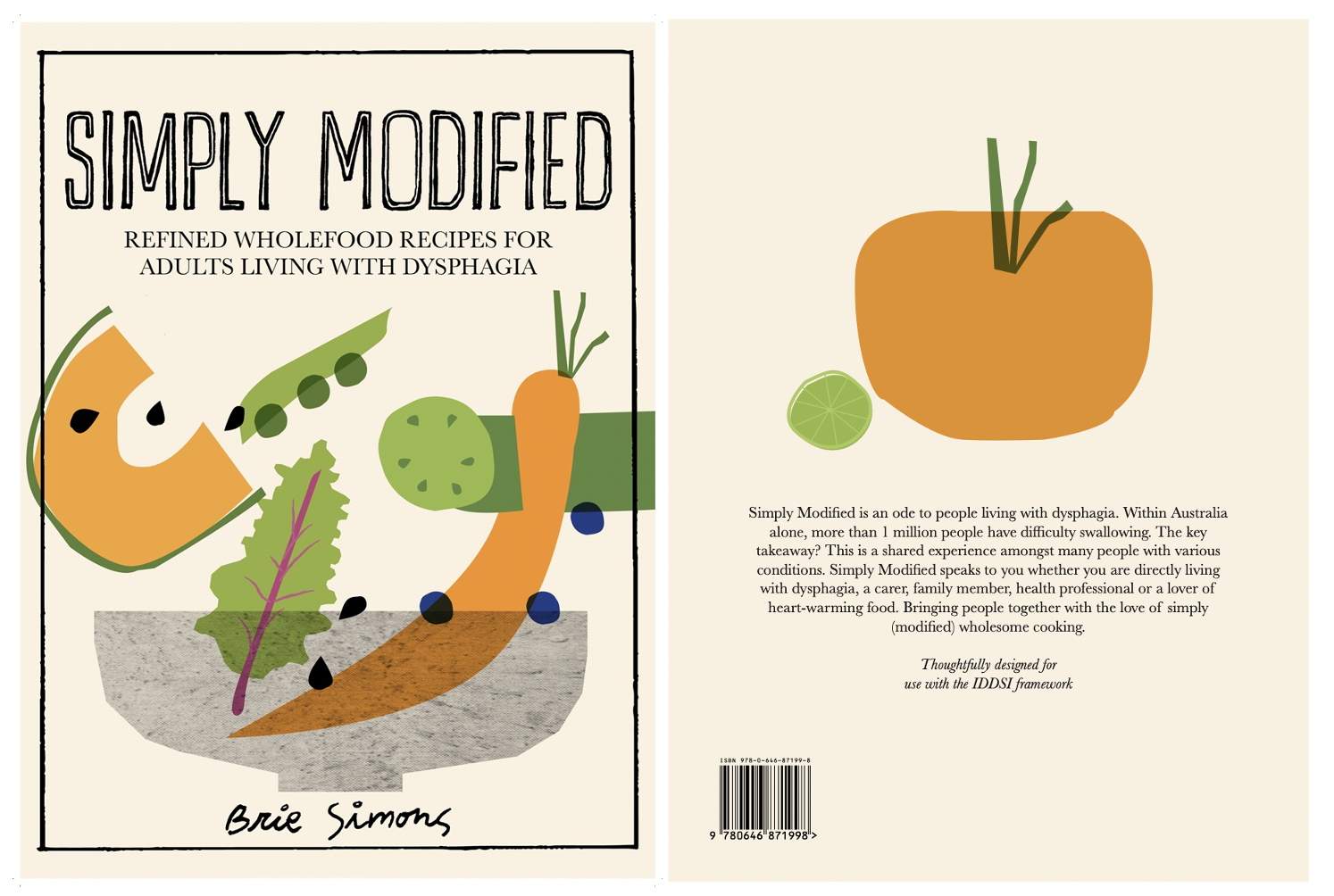
Purchase a copy of Simply Modified.
Written by Speech Pathologist Brie Simons. Including over 50 delicious recipes, with instructions to simply modify meals, making them easy to chew, soft and bite sized, minced and moist, or pureed.
It’s time to fall in love with food all over again…